In the offshore industry, ensuring safety, reliability, and efficiency isn’t just a box to tick — it’s a philosophy that starts at the very beginning of a project’s lifecycle.
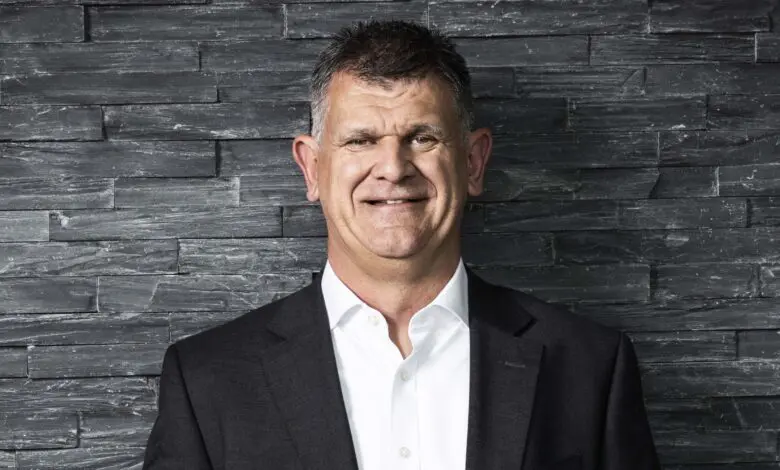
This principle was at the heart of a keynote speech Giovanni delivered at the Offshore HSE Conference, where he reflected on his 25 years in the industry and shared insights about the critical role of early operations integration.
Building Safety In: How Early Operations Integration in Projects Prevents Future Risks
Transcript of the keynote speech by Giovanni Cristofoli, Chair of IOGP and Senior Vice President, bp Solutions
Good afternoon, everyone.
Thank you for joining us at the Offshore HSE Conference 2025. It’s an honour to be here in Aberdeen, the crown jewel of the industry. I began my career in the North Sea 25 years ago on our Bruce platform, involved in various operational activities, many successful – including starting up the Rhum field – and some less successful: there was this one time we lost pipeline isolation plug down a gas line!
A lot has changed over these past 25 years. As we all know, the offshore industry keeps evolving, driven by regulatory shifts, the drive for efficiency and technological advancements and pressure from society on energy transition. However, one thing remains constant: the importance of safety in everything we do. We are a high hazardous industry: I always encourage people to visit the [explosion testing facility at] Spade Adam or watch the tragic Piper Alpha video, to really understand what we are dealing with. Everyone deserves to go home safe each day or at the end of their work trip.
That’s why whenever I visit our operating sites, as I did in January on ETAP, I love spending time in the field with our technicians, doing the morning operation rounds and basic care routines around our equipment, to deeply understand how work gets done. It keeps me grounded, informs my decisions and help me focus my teams on working in service of the front line. That’s where I get real feedback, positive and less so: offshore and sites are never shy when it comes to feedback and that is what I, we need.
That brings me to today and what I wish to discuss. Integrating operations and safety early in projects to prevent future incidents.
Safety starts from concept development. Right from the ideation stage – the first sketch and process flow diagram – operability, maintainability, reliability, and human factors need to be front and centre of any project decisions to avoid the introduction of defects or conditions that could lead to future incidents. We’ve got to transport ourselves into the future and see things through the eyes of those who will run the facility: how do the decisions I am making today affect the operator, technician or crew member doing their job on this asset in 5,10 or 20 years?
I will explore the safety benefits of deep integration between Projects and Operations. The value case for me is clear: it improves the quality of long-term operations, delivering a safer facility which improves the safety of our people who work on them – but also boosts financial value. We’ll also look at strategies for achieving integration despite challenges like the capital constraints we are all facing.
Let me describe the significance of Operations inputs in ensuring the long-term safety of Projects, from concept development through all stages of operation.
The benefits of a user-friendly design
From the beginning – early and consistently – the end user should be considered. Consider your mobile phone. Look at it for a minute (but please don’t use it now…). Think how user friendly it is, how the creators have designed it to meet your needs. This didn’t happen by accident – it was through thoughtfully putting the end-user at the centre of the design process. This intuitiveness is what we are also trying to achieve in safety. Our facility designs need to be user-friendly, so safety and operability become second nature – as familiar as our phones.
Keeping project concepts simple is harder than you think. As engineers, we are often drawn to technical solutions. Over time, our concepts tend to become more complex and elaborate as technology enables this. However, we must never lose sight of the mission: to create a safe, reliable, and efficient facility built for ease of operation by our people – our end users. Our designs and concepts should be based on what is needed, not on what we want or what is technically interesting. Safety and functionality must always be the priority.
But what does user-friendly really mean for our facilities? Let me elaborate with six main points.
- Maintainability. Let’s talk about maintainability—essentially, how straightforward it is to carry out maintenance on a facility, ensuring it continues to operate safely and efficiently. A great example comes from Azerbaijan’s Azeri Central East (ACE), our newest platform in the Caspian Sea capable of processing 100,000 barrels of oil per day. I’ll reference this project a few times today, as it’s a rich example of how early involvement of operations teams made a difference in many areas. Their inputs delivered practical safety enhancements, like better facility layouts, improved ventilation through equipment spacing, and advanced monitoring systems.
Let me now talk of a not-so-successful example, from when I worked on the Tangguh LNG facility in Indonesia. LNG facilities rely heavily on compressors and at Tangguh, we had several of them, with the inlet and outlet pipework located on the top of the compressor barrels. This enables the compressor to be located at ground level, thus eliminating the need to build costly support structures to position the compressor at height. While this delivered cost savings for the project, the downside was every three years we had to open the compressor barrels to inspect impellers, and doing so required removing and reinstalling the 60” inlet and outlet pipework each time, which involved complex lifting operations and challenges achieving alignment each time. This is not what great maintainability looks like.
- Operability. Let’s consider operability – the ease with which we can operate our facilities safely and reliably. Do we have individuals familiar with operations involved in the design and building of new facilities? Do they possess practical maintenance and operations experience? Are they knowledgeable about how work is actually performed? Do they understand the context required to run a successful operation in established oil and gas regions like Azerbaijan or new ones like Mauritania and Senegal?
Let me share another example of how considering operability at every stage makes a difference. Take the Glen Lyon FPSO, one of our prized assets here in the North Sea with the production capacity of 130,000 barrels of oil per day and store up to 800,000 barrels.
A critical part of its operation involves a complex offloading system that transfers oil to tankers using a long offloading hose. Initially, the procedure for this system was over 20 pages long—highly detailed, but cumbersome and prone to human error. By involving the operations team during the design, installation, testing, and commissioning stages, they simplified the process significantly. What was once a lengthy procedure was streamlined into a single-page checklist, ensuring the system operates safely, efficiently, and reliably for decades to come.
- Reliability. Let’s take another look at the new ACE platform. Its oil export line connects to a vast network of 30” export pipelines servicing the larger ACG oilfield. If you’re familiar with safety protocols – many informed by Piper Alpha – you’ll know this setup requires a Riser Emergency Shut Down Valve (RESDV). Regular closure testing of this valve is crucial to ensure it remains a reliable safety barrier throughout the asset’s operating life.
By involving the operations team early in the design process, they convinced the Project team to add a 12” bypass oil export line with its own RESDV and testing system. This adjustment eliminated the need to shut down the facility’s oil export – and oil production – every time the export line RESDV test was conducted, all at a reasonable cost. The change significantly boosted production uptime and ensured the plant could maintain a steady operational state, avoiding the high-risk process of shutting down and restarting production each time a test was required. Collaborating closely with engineers in the design team, the operations team worked to remove all single-point failures that could result in an undesired shutdown of a facility, crucial for a single-production-train facility like ACE, which does not have the ability to route production into another train the event of a production upset or equipment fault. As a result, ACE set new records within bp for its first-year Operational Efficiency (OE), achieving an impressive 98% compared to the typical 86% for oil facilities in their first year. This confirms the often repeated mantra that a reliable plant is a safe plant.
- Embedding IOGP Life Saving Rules. Staying on the theme of being user-centric with operability to enhance safety, the ACE project’s execution was the first major activity where bp introduced IOGP’s life-saving rules. These life-saving rules were thoughtfully designed with user-friendliness in mind, simplifying safety protocols into clear, actionable items that fostered a shared understanding and common language across teams and contractors. This is not just about setting the right safety culture but also building the plant with the life saving rules in mind, for example minimizing the need for operators to be in the line of fire, avoiding the need for complex energy isolations or making alarm management simple.
- The benefits of thinking about residual operational risk. While we know we cannot always eliminate risk, we can make it as low as reasonably practicable and create projects that deliver facilities with risks can be managed effectively by the end users – the people – that operate it.
The Operations team plays a crucial role in driving down the level of risk that is handed over by Projects to Operations.
A not-so-good example comes from the LNG Plant in Tangguh, where the LNG loading pumps needed to be started in a certain sequence with recycle valves throttled at the right time to a precise value to avoid surging the line. This was due to an inherent design defect on the loading system, and eventually an operator missed a step in the procedure; we had a surge on the LNG loading system, with rupture of a pipe bend and LNG release. We could erroneously focus on the operator making a mistake on the procedure, but the real issue was a design defect.
- The benefits of a well thought through opex profile. Capital expenditure is the main concern of the Project organization, along with schedule delivery. However, getting the operating cost profile correct is crucial. If the opex during operations differs from the approved project business case or benchmarks, the asset faces ongoing pressure to cut costs to stay operational. This creates additional challenges for the operations teams which, if not managed properly, could result in safety issues.
Operational teams play a crucial role in providing insight into key factors that affect the long-term costs of a facility. Areas such as maintenance and inspection planning, staffing levels, logistics requirements, and spare parts strategies are all critical elements where their expertise helps shape a facility that is not only cost-efficient to run but designed to be competitive right from the start.
Back to ACE, this project faced significant financial challenges during its sanctioning phase, with strict control over operating expenses (Opex) playing a vital role in preserving its overall value. By involving operations early in the process, they contributed to a reduction of life-of-field operating costs by over 30%. Impressively, after a year of operation, the actual opex costs were remarkably close to this forecast, with only a minor variation of 2-3%, demonstrating the success of this integrated approach.
We have examined the importance of operations inputs in ensuring the success of long-term operations. Operations inputs are also essential for the successful delivery of projects: (1) maintainability, (2) operability, (3) reliability, (4) IOGP standards embedment, (5) risk management (6) realistic opex profiles are critical to a user-friendly design and long term success.
- Operations can make project centralization and standardization successful. In my company, like many of our peers, we have a centralized project team. This setup allows us to work more efficiently, lower costs, improve through scale, and benefit from shared best practices. By using common methods and learning from each project, we ensure constant improvement for the next one.
But it’s a balancing act. A centralized approach to project operations input in the early stages of a project has the benefit of company-wide learnings and making good choices for the business on cost and schedule but you run the risk of taking it away from the end user. As the project moves to detailed engineering, it is crucial to involve the right experience in decision-making. There are limits to standardization for its own sake and the impact on operations and ultimate value delivery.
- When standardization works: for our Kaskida Project – our 6th operated hub in the Gulf America designed for a capacity for 80,000 barrels of oil per day – we are using a proven and reliable industry-standard design that results in fewer people on board – with a lower number of people exposed to the process safety and personal risks of working offshore – compared to other facilities in the Gulf. By integrating early feedback from our operating teams on recent start-ups, like Argos – our 140,000 barrels of oil per day platform we started up in 2023 – we’ve made our design both compatible with our operations and avoiding unnecessary complexity.
Operations help making Project standardization successful.
- Operations can speed up project execution. That’s all well and good, but we’ve come to realize that bringing operations into the fold and deeply integrating during the concept ideation and development stages isn’t just about delivering projects safely—it’s also about delivering them faster.
- In Trinidad, we were looking to develop new pools of gas in addition to our existing footprint of normally unattended installations (NUI). Initially the project team for one of those new fields – called Cypre – created a project concept for a new NUI. By involving the deep experience of existing operations teams to understand existing plant constraints, capacities and tie-in locations as well as supporting the brownfield integration of these new fields, the project was able to adapt this concept into a subsea tieback to an existing operating NUI called Juniper. This led to a lower cost and faster development by working closely with operations and utilizing existing facilities to avoid introducing the risks and costs from a new platform.
- Involvement of operations dramatically improves start up and commissioning
Let’s revisit the Caspian Sea and the ACE platform, which we successfully started up last year. During the design phase, we faced a challenge: pre-drilled wells weren’t financially viable due to the high cost of hiring a standalone drill rig in the region. To address this, the operations team developed a clear plan showing how we could power up the facility using imported power and start operations with pipeline gas and then commence drilling with the platform’s own rig. They collaborated closely with engineers to ensure the platform was designed to handle very low flow rates from a single well, focusing on high turndown capability. This creative and innovative approach not only reduced upfront costs but also contributed to one of the most successful start-ups in bp’s history, significantly enhancing the project’s overall value to the company.
- Enhancing Project safety culture. Involving operations teams early on not only enhances construction efficiency but also plays a critical role in ensuring site safety. For instance, the ACE Project achieved an extraordinary milestone, completing roughly 20 million work hours without any LTIs, making it one of the safest projects in bp’s history. This success was largely attributed to the input from operations, which provided over 80% of the safety observations in the construction yard. Their contributions not only ensured safety but also set a remarkable standard for project execution.
To recap, an integrated Operations team enable Projects to be successful through (1) enhancing standardization; (2) optimizing design (3) optimizing commissioning and start-up and (4) enhancing safety culture.
If the value case for operations and projects integration is clear, how do we achieve it?
Simply deploying few Operations and safety people into Project is NOT enough.
It is about (1) Leadership; (2) Processes and (3) Organization structure.
- Leadership – Leadership naturally brings us to the heart of what makes projects truly succeed: trust and collaboration. It’s not just about having all the right people in the room—it’s about building a team that works together seamlessly, values diverse perspectives, and keeps the shared goal front and center. When every team member, from construction to commissioning to start-up and operations, is aligned on their roles and responsibilities, and when clear systems are in place to manage those hand-offs, the results are remarkable.
- Take Shah Deniz, for example. From the start, the operations and commissioning teams worked closely together to ensure a smooth and safe start-up. The operations team deployed process engineers to the commissioning team to help develop detailed test procedures. This collaboration didn’t just streamline the handovers—it also gave engineers valuable, hands-on experience that helped create more practical and efficient start-up procedures.
- Processes: Leadership alone isn’t enough to achieve this. Successfully integrating operations into projects must be done in a structured way. At bp, we’re particularly proud of our “Operational Readiness and Start-up Assurance Process,” which has proven its value for nearly two decades and across dozens of major project start-ups.
This process ensures that every new facility is ready to comply with our operating management system (OMS) and able to operate safely and reliably from day one. It’s a detailed plan that covers 20 sub-elements, executed over several years in step with the project delivery timeline. These include people competence, operating procedures, emergency response, maintenance builds and supporting contracts, among others.
The goal of this structured approach is simple: to consistently guarantee that projects don’t just start up smoothly but stay operational effectively in the long term. The benefits are enormous—just as our centralized project delivery approach brings efficiency through standardization and learning from past projects, our operations readiness process allows us to apply those lessons to continually improve safety and operational performance.
- Organization Structure. An Operations leader with strong experience and credibility, reporting into the Operations leadership of bp, sits at the Project Leadership team, thus providing inputs, deploying quality Operations people, creating some healthy tensions to achieve the goals of a user-friendly design.
In Closing
It’s clear that integrating safety into every stage of a project – through operations integration – from concept development to detailed engineering and operations, is crucial. This approach not only enhances safety performance but also delivers the required reliability and efficiency of the asset, which results in value delivery for all stakeholders. By prioritizing safety and fostering collaboration between teams, we can create projects that are not only successful but also sustainable and safe for everyone involved.
I leave you with what I said at the beginning: Let’s build projects with that are user-friendly and with the end goal in mind: safe and reliable operations for many years to come. Thank you.