Metocean
Bringing the value of applied oceanography and meteorology into operations planning, designing better offshore and onshore structures, and improving the safety of personnel, assets and operations
Metocean
Bringing the value of applied oceanography and meteorology into operations planning, designing better offshore and onshore structures, and improving the safety of personnel, assets and operations
Metocean Committee
Encouraging a better understanding of how applied oceanography and meteorology can improve the design and operation of offshore and onshore structures.
The Metocean Committee also serves as the industry link with relevant government agencies and certification societies.
Objectives
Offshore facilities and operated facility or critical infrastructure need to withstand the forces of winds, waves and ocean currents over the 30-40 year life span of a producing field. That is why offshore structures and infrastructure design, construction, operation, maintenance and decommissioning are critically dependent on a thorough understanding of all the forces that prevail in the marine environment.
IOGP’s Metocean Committee encourages a better understanding of the value of applied oceanography and meteorology both within and outside the industry. It promotes use of sound metocean techniques in offshore and onshore structure design and operations. When appropriate, the Committee also builds industry consensus on relevant issues.
Committee activities include:
- Critiques of existing and proposed rules and regulations of government agencies and certification societies
- Providing a focal point for communicating metocean industry requirements to relevant regional and global metocean organizations
- Developing appropriate metocean standards in safety and engineering
- Advancing oceanography, metocean, and statistical analysis techniques for developing metocean design criteria. These include joint probability, hindcasting, instrumentation, methods of observation and remote sensing of metocean data. In particular, the Committee highlights cost-effective techniques such as improved data collection methods and the use of numerical models
- Providing a forum for the discussion of on-going regional Metocean projects and helping to initiate Metocean research in key risk or growth areas
Contacts
Requests for further information about the IOGP Metocean Committee should be addressed to Birgitta Visser, Metocean Committee Manager and JIPs, at bv@iogp.org
Related content

IOGP’s Metocean Committee has published IOGP Report 607 Recommended practices for Acoustic Doppler Current Profiler (ADCP) deployment.

IOGP’s Metocean Committee has published an overview of the current state of and recent developments in short-term forecasting of tropical cyclones.

The transition to a low carbon future offers a huge set of challenges to us all – from how we heat our homes to how the companies we work for will enable the transition.
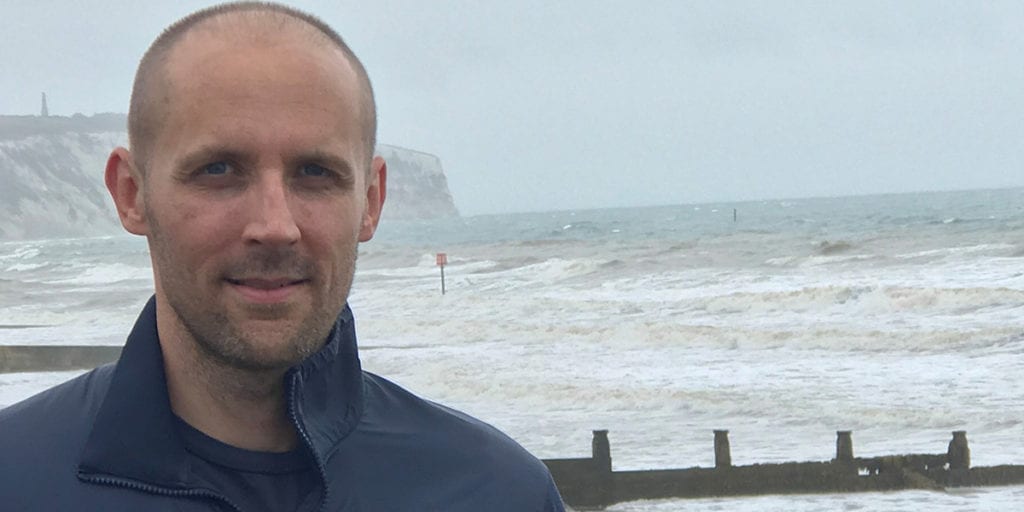
In each edition of our newsletter, we publish a short interview with an IOGP colleague or Committee Member. This Pulse’s interview is with the Chair of the Metocean Committee, Oli Jones.
IOGP’s Metocean Committee has elected Oliver (Oli) Jones of bp as Chair. He succeeds James Stear of Chevron.
The ocean is our planet’s largest ecosystem. It stabilizes climate, stores carbon, produces oxygen, nurtures unimaginable biodiversity, and directly supports human wellbeing through food, mineral, and energy resources, as well as providing cultural and recreational opportunities. Unfortunately, much of the ocean is now seriously degraded, and as a responsible sea user, IOGP is working to help the industry play its role as part of the solution.

IOGP joined forces with the Joint Technical Commission for Oceanography and Marine Meteorology (JCOMM) – founded by the World Meteorological Organization and UNESCO’s Intergovernmental Oceanographic Commission – and the World Climate Research Program (WCRP) to hold a cross-disciplinary workshop on the physical risk for the oil and gas industry of a changing climate.

Highlights is sad to report that former Metocean Committee Chair Chris Shaw died on Monday, 12th October, in St. David’s hospice in North Wales. His family were at his side.

Eugene Berek (ExxonMobil) and Valerie Quiniou-Ramus (Total) have been elected Chair and Vice Chair of the Metocean Committee. “It is difficult for me to imagine improving on the leadership that
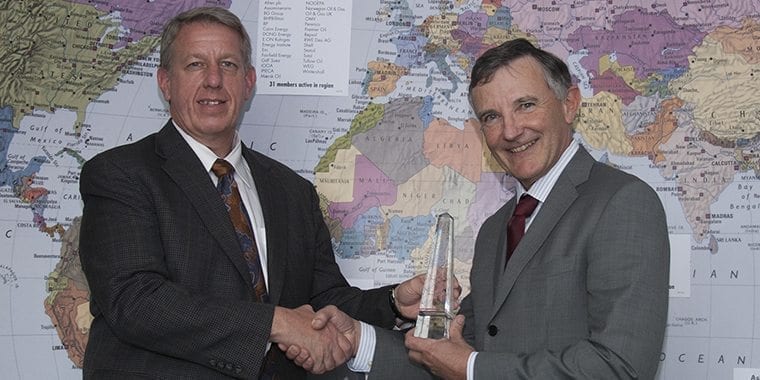
Colin Grant, on the occasion of his retirement as Chair, was honoured by the Management Committee, and presented with a crystal oil-rig obelisk. He was praised for his ‘extraordinary contribution’


